Park News July 15, 2015

Hooray! We are now “Friends of Waterford Park, Inc.”, a 501(c)(3) charity recognized by the IRS. We will open a bank account and soon will be operating independently. We owe a great thank-you to the Friends of Baker Park which has served as our fiscal agent for many years. We will let you know when our transition is complete and your dues/donations can be payable to us rather than to FOBP.

Park blooms – the surge of spring bloom is over, but several shrubs and flowers are in bloom. Look for white hydrangea blooms along the path near the new bridge. As the path curves into the open field of Waterford Park, the pink blooms of the swamp rose and the white blooms of buttonbush appear. On the hill at Meadowdale, the oak-leaf hydrangea is gorgeous, and the wild petunias are emerging. Many plants are in bloom in the meadow, most conspicuously the pink of the monarda (beebalm) and the bright orange of butterfly weed. In the woods, the bottlebrush buckeyes and elderberries are in flower.

Fruits of the chokeberry, native black raspberry and several viburnum are coming out.

Our Eagle Scout candidate is about 3/4 finished with his paths in the woods. We were able to treat all 24 of the ashes we wanted to protect. You can see tiny yellow plugs at the base of the treated trees.

Most of you have renewed. Let’s try to get the rest in so we can be done with that annual administrative task.  You folks continue to be THE BEST! We have such great support. (If you need another  membership form, go to www.friendsofwaterfordpark.org. Dave Maloney keeps a link to the form on the first page.)

GInny

In Your Garden, Choose Plants That Help the Environment

In Your Garden, Choose Plants That Help the Environment

By DOUGLAS W. TALLAMYMARCH 11, 2015

OXFORD, Pa. — I GREW up thinking little of plants. I was interested in snakes and turtles, then insects and, eventually, birds. Now I like plants. But I still like the life they create even more.

Plants are as close to biological miracles as a scientist could dare admit. After all, they allow us, and nearly every other species, to eat sunlight, by creating the nourishment that drives food webs on this planet. As if that weren’t enough, plants also produce oxygen, build topsoil and hold it in place, prevent floods, sequester carbon dioxide, buffer extreme weather and clean our water. Considering all this, you might think we gardeners would value plants for what they do. Instead, we value them for what they look like.

When we design our home landscapes, too many of us choose beautiful plants from all over the world, without considering their ability to support life within our local ecosystems.

Last summer I did a simple experiment at home to measure just how different the plants we use for landscaping can be in supporting local animals. I compared a young white oak in my yard with one of the Bradford pears in my neighbor’s yard. Both trees are the same size, but Bradford pears are ornamentals from Asia, while white oaks are native to eastern North America. I walked around each tree and counted the caterpillars on their leaves at head height. I found 410 caterpillars on the white oak (comprising 19 different species), and only one caterpillar (an inchworm) on the Bradford pear.

Was this a fluke? Hardly. The next day I repeated my survey on a different white oak and Bradford pear. This time I found 233 caterpillars on the white oak (comprising 15 species) and, again, only one on the Bradford pear.

Why such huge differences? It’s simple: Plants don’t want to be eaten, so they have loaded their tissues with nasty chemicals that would kill most insects if eaten. Insects do eat plants, though, and they achieve this by adapting to the chemical defenses of just one or two plant lineages. So some have evolved to eat oak trees without dying, while others have specialized in native cherries or ashes and so on.

But local insects have only just met Bradford pears, in an evolutionary sense, and have not had the time — millennia — required to adapt to their chemical defenses. And so Bradford pears stand virtually untouched in my neighbor’s yard.

In the past, we thought this was a good thing. After all, Asian ornamentals were planted to look pretty, and we certainly didn’t want insects eating them. We were happy with our perfect pears, burning bushes, Japanese barberries, porcelain berries, golden rain trees, crape myrtles, privets, bush honeysuckles and all the other foreign ornamentals.
xchickBut there are serious ecological consequences to such choices, and another exercise you can do at home makes them clear. This spring, if you live in North America, put up a chickadee nest box in your yard. If you are lucky, a pair of chickadees will move in and raise a family. While they are feeding their young, watch what the chickadees bring to the nest: mostly caterpillars. Both parents take turns feeding the chicks, enabling them to bring a caterpillar to the nest once every three minutes. And they do this from 6 a.m. until 8 p.m. for each of the 16 to 18 days it takes the chicks to fledge. That’s a total of 350 to 570 caterpillars every day, depending on how many chicks they have. So, an incredible 6,000 to 9,000 caterpillars are required to make one clutch of chickadees.

And chickadees are tiny birds: just a third of an ounce. What if you wanted to support red-bellied woodpeckers in your yard, a bird that is about eight times heavier than a chickadee? How many caterpillars would that take?

What we plant in our landscapes determines what can live in our landscapes. Controlling what grows in our yards is like playing God. By favoring productive species, we can create life, and by using nonnative plants, we can prevent it.

An American yard dominated by Asian ornamentals does not produce nearly the quantity and diversity of insects needed for birds to reproduce. Some might argue that we should just let those birds breed “in nature.” That worked in the past, but now there simply is not enough “nature” left. And it shows. Many bird species in North America have declined drastically in the past 40 years.

Fortunately, more and more gardeners are realizing that their yards offer one of the most empowering conservation options we have, and are sharing their properties with the nature around them.

By the way, you might assume that my oak was riddled with unsightly caterpillar holes, but not so. Since birds eat most of the caterpillars before they get very large, from 10 feet away the oak looked as perfect as a Bradford pear.

Douglas W. Tallamy, a professor of entomology and wildlife ecology at the University of Delaware, is the author of “Bringing Nature Home: How You Can Sustain Wildlife With Native Plants.”

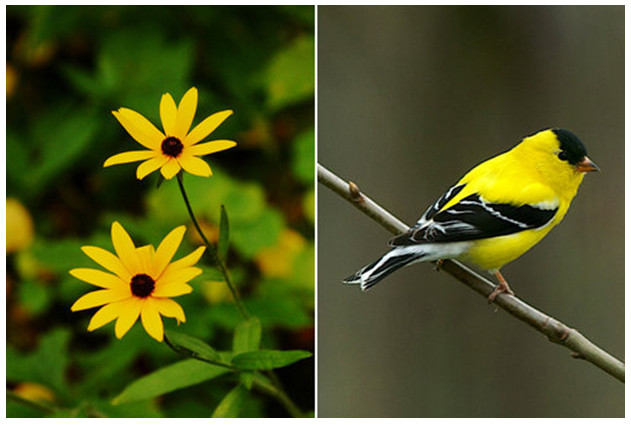
Blooms Galore in Park May 12, 2015

I hope you get a chance if you live close to walk in the park in the next week.

Both native honeysuckles, red at the kiosk and yellow at the west end, are in full bloom. Look for hummingbirds on them.

All the viburnum, cranberry, blackhaw, possumhaw , nannyberry have white flowers. These become bird food in mid to late summer.

Sweetshrub with its dark flowers along the path.

In the Meadowdale wildflower area the indigo, foamflower, the fringetree and a gorgeous purple flower that I have forgotten the name of!

On the hill toward the east end a large fringetree and the red blooms of the horsechestnut cultivars.

In the Berkheimer memorial area two red buckeyes (again look for hummingbirds).

Two of the pawpaw trees there have flowers – I wonder if we will get fruits.

Along the old sewer line the mystery purple flower that just popped up is out again along with native white wildflowers. We have tons of trout lilies but I never see the yellow flowers they should have. Let me know if you spot any.

Behind the green benches the Canadian anemone is getting ready to pop their white blooms.

And my favorite, the yellowwood at the west end will have its amazing wisteria-like blooms opening is a few days.

All in all it is a great time to stroll and see what you can see. Enjoy!

If you are a member and received our renewal info along with the ash conservation sheet, please get the renewal form back to us so we know where we stand in the financial realm.

Thanks.

FWP May, 2015 Newsletter

May, 2015

To the supporters of the Friends of Waterford Park:

As we write this spring membership letter, the park is glorious. The dogwood, viburnum and redbuds are in bloom, spring wildflowers are blooming and birds are returning to nest.

The woods is in better shape than ever. You donated $4,300 to have piles of brush and damaged trees removed, and what a difference it has made. We were able to get a discounted price from the contractor because we were providing him a substantial amount of winter work.

The worker bees are clearing honeysuckle, wineberry, etc. from the understory; we began last fall at the east end of the woods toward Rt. 15. Hopefully by this time next year we will have worked on the entire understory..

The contractor planted the roughly 140 new trees slated for the park as part of the City grant funds. We water some; the contractor does most of that work.

Seed has been purchased to revitalize the central portion of the meadow. Donnie Rohrback of MD DNR will plant that seed as soon as the ground is dry enough for his equipment.

Kevin Jaramillo is planning his Eagle Scout project: two mulched paths through the woods. This will be completed soon. We hope to also put a path through the meadow.

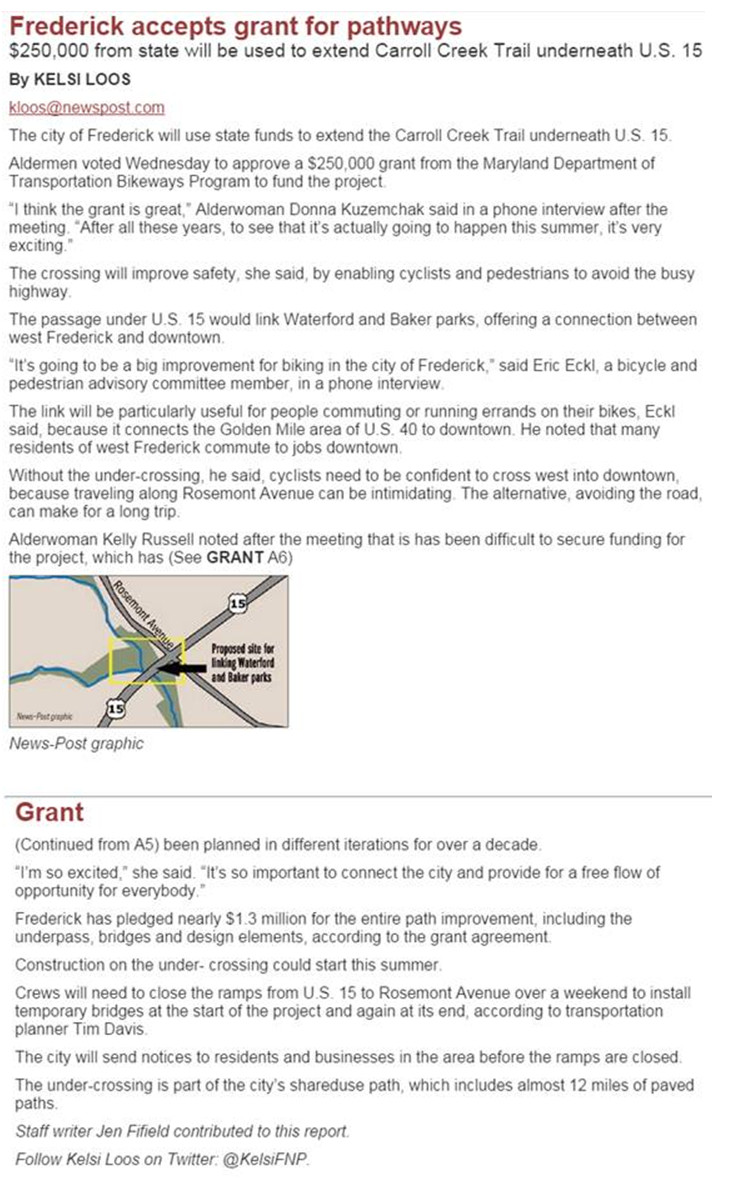
The shared use path is behind schedule because the complicated permits process took longer than anticipated; however, the path WILL come from Baker Park to Waterford, hopefully later in 2015.

In addition to the regular worker bee tasks, our project for 2015 is to treat ash trees to prevent their demise from emerald ash borer (EAB). This insect is in the county and will surely kill all ashes in this area within a few years. Working with the City, MD DNR and licensed contractors, we have identified 24 ashes that are worth saving with an approximate 2015 treatment cost of $3,400. Some have poor growth structure so we will cut those. Ashes are marked with white paint, and all but the largest of those that we will treat have pink tape with the dollar amount needed to treat each tree. Will you consider “adopting a tree”?  We will also need funds to cut trees that are not to be treated, and the treatments must be repeated in two years. We hope to build a reserve in our “ashes” fund for these future needs. We hope that when you read the enclosed Management Statement you will become a part of the effort to save our ashes. We have received $1,000 in grant funds from two State sources as well as several donations and pledges so we are off to a very good start.

Our other large project is to become Friends of Waterford Park, Inc., and to obtain 501c3 charitable designation. Until that process is completed, donations and dues will continue to be made to The Friends of Baker Park. We are grateful for their support as our fiscal agent.

Friends of Waterford Park has thrived since 2005. The state again this year awarded us the “Green” designation in the PLANT program (People Loving and Nurturing Trees). This designation usually goes to entities that have paid staff. Member dues and donations along with funds from state and federal grants have enabled our all-volunteer group to make a huge difference in the park. We hope that you will continue to support our efforts.

Friends of Waterford Park Board of Directors

Ginny Brace
Kathy Soria
Rachel Zigler
Alice Meiners
Karen Berkheimer Morton

Park News April 13, 2015

Trees are budding, spring is here.

Lots of news.

First, we should shortly be FWP, Inc. – we submitted our paperwork to the state. Next steps are to get our tax ID number and apply for 501c3 status. Until we get that, we will continue to have our funds with Friends of Baker Park in an FWP account. We will get our membership renewal info to you soon.

Second, we have marked ash trees, and the DNR has recommended those that are worth treating and saving. We have $500 in grant funds to treat one large tree and have asked the state for an additional $1000 for two more large trees. More on this in the coming weeks.

Third, the planting of approximately 140 new trees should be completed by the end of this week. We will have more of the trees that do well in the park, and we are trying several new ones: Franklinia (I saw these at Mt. Cuba Center), Carolina silverbell (I saw this at Biltmore), 2 kinds of holly planted on the hill, a cottonless cottonwood (likes our soil), butternut (a walnut that needs good air circulation), sassafras on the hill, American smoketree (not the smokebush people plant in yards but with the same gorgeous pink blooms) and cucumber magnolia.

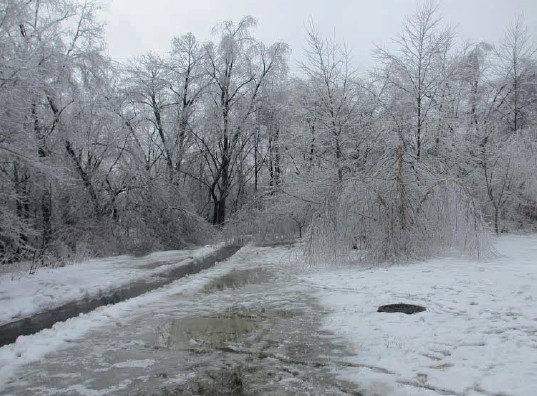
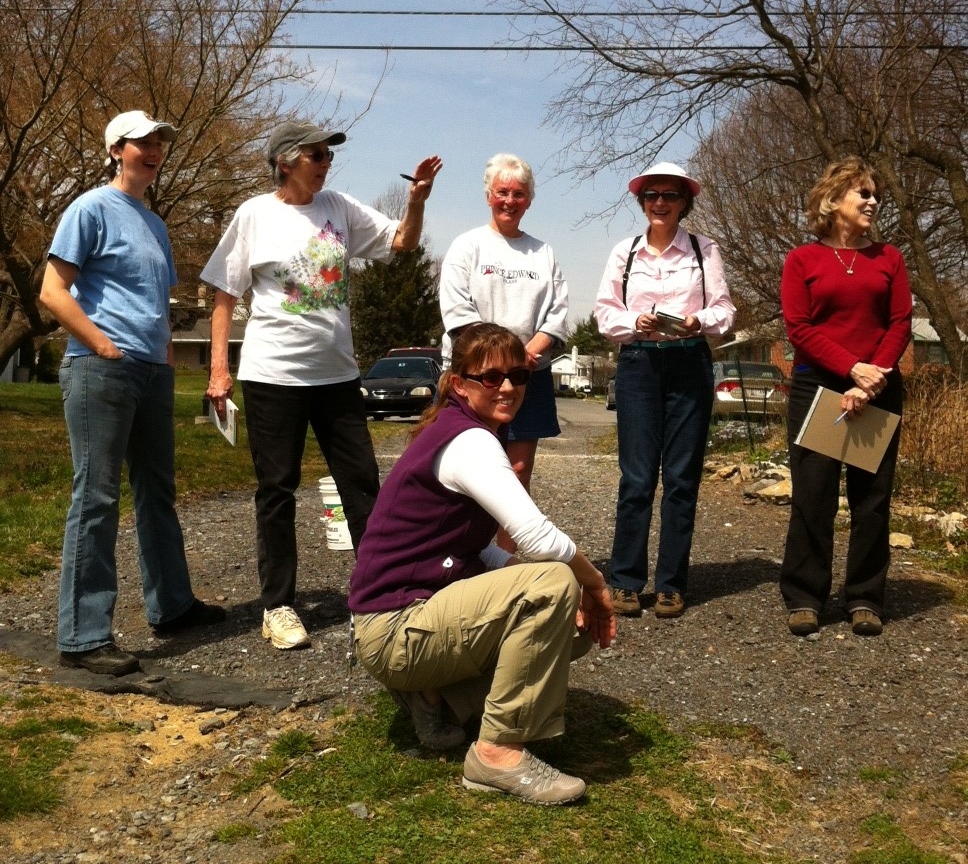
Finally, a year-long effort to clean up the woods from where the path curves in to the downstream bridge eastward toward Rt. 15 was completed yesterday by 5 worker bees. The weather was not our friend this winter, so there is more cleanup in other areas, but it is very exciting to have that section in good shape.

I hope you get out to see trees like the redbuds in bloom in the coming days and weeks.

Ginny

Update (birds and blooms) – May 2, 2013

We have three tree species in bloom that are worth the visit to the park. Both yellowwoods in Waterford are displaying their wisteria-like spectacular blooms. On the hill in Waterford further toward Rt. 15 are two horse chestnut ‘Briotti’ with their huge red blossoms.  The fringetree on the hill near the Meadowdale entrance is also wonderful.

Along the path the wood phlox and geranium are low to the ground, many cranberry viburnum bushes and arrowwood viburnum with white blooms are visible, our one mapleleaf viburnum has small white flowers and the blackberries are in flower. The native columbine is just about finished but some red blooms remain. In the woods the waterleaf with its small blossoms is still blooming, lots of them. While weeding near the path a couple of weeks ago we discovered a stand of solomon seal thriving.

If you get to the park, you may see some of the birds observed today by our expert birder. Below is the list he sent to me.  Look especially on the hill between Meadowdale and our shed at the multi-stemmed serviceberry – it attracts waxwings, robins, catbirds, all the birds that can swallow its pea-sized red berries. It is one of the earliest good berry trees.

Mallard
Great Blue Heron
Red-tailed Hawk
Mourning Dove
Chimney Swift
Red-bellied Woodpecker
Downy Woodpecker
Phoebe
Kingbird
Blue Jay
Fish Crow
Tree Sparrow
Titmouse
House Wren
Robin
Catbird
Starling
Cedar Waxwing
Cardinal
Song Sparrow
Grackle
Cowbird
House Finch
Goldfinch
House Sparrow

– Ginny